Waterpark Simulator Racer Slides — Head-to-Head High-Speed Competition
Build and place competitive racing slides that let guests compete side by side.
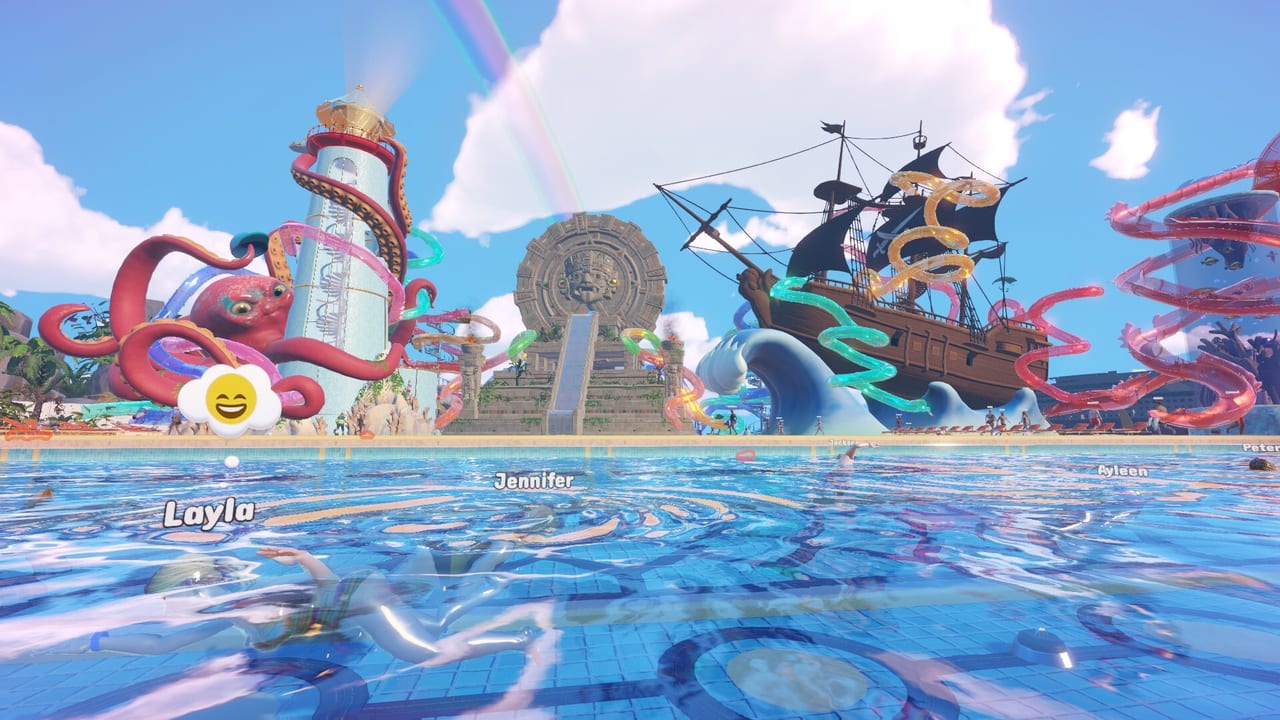
What are Racer Slides
Racer Slides are a competitive attraction type introduced in Waterpark Simulator that lets guests race head-to-head on synchronized high-speed water slides. Unlike traditional slides that focus on single-rider thrills, Racer Slides create a spectacle where two or more guests launch simultaneously and compete to reach the splashdown first. This guide covers how to build effective Racer Slides, position them for maximum fun and safety, and integrate them into your park’s circulation without creating bottlenecks.
CayPlay Studios added Racer Slides as part of the game’s evolving attraction roster, giving players a new way to add competitive excitement to their parks. The feature works with the existing physics system, so ragdoll chaos can still occur if guests land awkwardly—but the racing format adds a social element that draws crowds and boosts park ratings when done correctly.
Building Racer Slides
Racer Slides require more planning than standard slides because they need synchronized starting positions and parallel run tracks. Each racer lane must be identical in height, angle, and length to ensure fair competition. If one lane is even slightly faster than another, guests will avoid the slower lane and create imbalanced queues.
Key construction principles:
- Equal lane lengths — Every racing lane must measure the same from start platform to splashdown
- Matching gradients — Use identical slope angles across all lanes so speed remains consistent
- Separate splashdown zones — Design individual landing pools for each lane to prevent collision chaos at the finish
- Staging platforms — Build a shared starting platform where racers wait side by side before the signal
Position the starting platform high enough to give racers a dramatic launch view but low enough that the overall structure fits within your park’s circulation. Avoid placing Racer Slides where the approach path crosses major guest walkways—competitors should reach the start platform without interfering with general park flow.
Placement Strategy
Racer Slides work best when they face a visible spectator area. Players and other guests should be able to watch races from a nearby deck or walkway without blocking service routes. This creates a natural observation pit that boosts the attraction’s prestige value and increases the likelihood of guests stopping to watch rather than walking past.
Avoid clustering Racer Slides too close to food concessions or retail stalls—racing crowds generate sudden mess spikes from spectators, and placing trash cans directly adjacent to viewing areas helps manage the additional litter without requiring dedicated cleaning staff for that zone alone.
The competitive format also means guests may linger longer at Racer Slides than at solitary attractions. Ensure adequate bench seating nearby so waiting spectators can rest while watching races. This is especially important on Beach map layouts where the extra walking distance can fatigue guests faster.
Integration with Park Circulation
Racer Slides add a high-energy node to your park’s circulation network. Route guest pathways so the racing area acts as a natural landmark rather than a chokepoint. A good approach places the attraction at a cross-path intersection where guests passing through can casually notice races without the park’s overall flow depending on that attraction’s popularity.
In multiplayer co-op parks, assign one player to monitor Racer Slides during peak hours—refereeing disputes, resetting fallen racers, and keeping splashdown pools clear of debris. This role complement works well alongside gate management and cleaning loops documented in the Multiplayer Co-op Guide.
Safety Considerations
Racer Slides use the same splashdown physics as standard slides, which means they can produce ragdoll injuries if guests land at awkward angles. Design landing pools with adequate depth and width for multi-lane racers. Separate each lane’s splash zone with a low divider or raised edge to prevent racers from colliding mid-landing.
Lifeguard coverage matters more at Racer Slides than at solitary attractions because races draw larger spectator crowds near the water. Assign at least one lifeguard to the racing area during peak operating hours, especially if your park frequently reaches high guest counts. See the Lifeguards and Rescues Guide for positioning tips.
Research and Upgrade Path
Racer Slides unlock through the standard research tree rather than as a special attraction tier. Prioritize research that increases attraction throughput before investing in multiple racing lanes—if your park’s guest movement is already constrained by narrow pathways or limited food options, Racer Slides will underperform regardless of how well they’re built.
Early research investments in Research Points should focus on pathway expansion and attraction capacity before adding competitive slide features. Once your park’s circulation is smooth, Racer Slides become a high-impact addition that compounds the existing flow.
Racer Slides and Diamond Rating
Competitive attractions contribute to your park’s overall Fun rating, which feeds directly into the Stars and Diamond Rating system. Races that run fairly with visible winners and minimal injuries create positive guest sentiment that accumulates toward your next star objective.
However, avoid treating Racer Slides as a primary rating driver—they work best as a supplementary attraction that reinforces an already-functional park. A park that struggles with cleanliness, correct ticketing, or food restocking will not improve its rating by adding competitive races, and frustrated racers may actually damage your satisfaction scores if injuries or disputes occur frequently.
FAQ
Q: Can guests race on any water slide?
A: No. Racer Slides are a specific attraction type with synchronized starting positions and parallel lanes. Standard slides do not support competitive racing.
Q: How many lanes can a Racer Slide have?
A: Construction options allow multiple lanes side by side. Build at least two lanes for meaningful competition—more lanes increase spectacle but require more space and management attention.
Q: Do Racer Slides work in multiplayer co-op?
A: Yes. All players can interact with Racer Slides in online co-op. Assign a dedicated monitor role during peak hours to handle disputes and keep splashdown zones clear.
Q: Are Racer Slides available from game launch?
A: Racer Slides were introduced in a post-launch update. Check the Updates Hub for the specific patch that added this attraction type.
Q: How do Racer Slides affect park ratings?
A: They contribute to Fun rating when races run fairly with minimal injuries. Use them as a supplementary attraction rather than a primary rating driver.
Frequently Asked Questions
Quick answers to the most common questions.
What makes Racer Slides different from standard slides?
Racer Slides feature synchronized starting positions and parallel lanes so guests can race head-to-head. Standard slides are single-rider attractions without competitive elements.
How many lanes should a Racer Slide have?
Build at least two lanes for meaningful competition. More lanes increase spectacle but require additional space and management attention.
Where is the best spot to place Racer Slides?
Position them at cross-path intersections with visible spectator areas nearby. Avoid placing them where approach paths cross major walkways.
Do Racer Slides need lifeguard coverage?
Yes. The competitive format draws larger crowds near water, so assign at least one lifeguard to the racing area during peak hours.
Can Racer Slides improve my park's rating?
They contribute to Fun rating when races run fairly with minimal injuries. Treat them as supplementary attractions, not primary rating drivers.